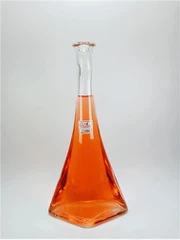

Evolution Of Wine Bottle Materials
Mar 05, 2023
For thousands of years, the material of wine bottles has been constantly changing, mainly determined by the production process and technology at that time. In ancient times, it was mainly a natural container formed in nature such as bamboo, wood, bamboo, fruit shells, and animal horns; From the Neolithic Age to the Xia Dynasty, pottery was the mainstream, and a small number of bronze and lacquer wine utensils appeared; During the Shang and Zhou dynasties, with the popularization of bronze ware, copper wine utensils occupied a dominant position, and pottery retreated to the "second tier" position; During the Qin and Han Dynasties, lacquer ware prevailed, and jade wine utensils appeared; From the Wei and Jin dynasties to the Tang, Song, Ming, and Qing dynasties, porcelain wine sets have been firmly occupying the throne of supremacy. Fine wine and ceramics are both "quintessence" of our country that deserves special attention. The combination of the two adds infinite cultural heritage and profound historical feelings to wine sets. During this period, there were also many valuable wine utensils made of gold, silver, and jade; Since the Republic of China, China has always played the leading role in glass wine bottles, and a large number of ceramic wine bottles have been used (many use Jingdezhen porcelain, Yixing purple sand, and well-known kiln fired porcelain), as well as a small number of wine bottles made of aluminum, galvanized iron, plastic, stainless steel, artificial crystal, bamboo, wood, bamboo, and special paper. Throughout the evolution of Chinese wine containers, the order of materials that once dominated is roughly: natural materials - pottery - bronze - lacquer - porcelain - glass.
The materials of wine bottles are becoming increasingly diverse, including gold plating, copper plating, iron, tin, stainless steel, pottery, purple sand, porcelain, wood, bamboo, glass, ox horn, bakelite, and so on. Wine bottles made of various materials display their respective characteristics and styles. Some are magnificent and precious, some are dignified and generous, and some are light and graceful. Like a gilded seven layer pagoda bottle. Copper plated Guizhou Laojiao Cannon Bottle. Guizhou and Guangxi use local specialty resources such as ox horn and bamboo to make various characteristic wine bottles. In Yunnan, the 18 strange places where pipes are sold as wine are favored.
Common wine bottles include ceramic, glass, and plastic bottles, among which ceramic bottles are particularly popular.